
The answer is usually yes.
Health insurance isn’t something you choose once and forget. As your life changes, your healthcare needs, financial priorities, eligibility, and even the doctors you see can change too. Reviewing your health insurance after major life events, and even some quieter ones, can help ensure your coverage continues to fit your life.
- Your health insurance should evolve as your life evolves.
- Many life changes can affect your coverage needs or eligibility.
- Not every important change is dramatic—small changes matter too.
- Reviewing your plan before you need care can help you avoid unnecessary surprises.
- National Benefit Plans helps individuals, families, and small businesses understand their options with clarity and confidence.
Why Most People Wait Too Long
Most people think about their health insurance once a year.
Usually during Open Enrollment.
The rest of the year, life keeps moving.
People change jobs. Families grow. Children become adults. Businesses are started. Parents begin needing care. Healthcare needs evolve.
Yet many people continue with the same health plan simply because they already have one. The result isn’t necessarily having bad insurance. It’s having insurance that may no longer fit the life you’re living today.
According to a recent survey by the KFF, 36% of adults reported skipping or postponing needed healthcare because of the cost, and nearly one in five said their health became worse because they delayed care. While affordability is only one part of the equation, understanding your coverage before you need it can help you make more informed healthcare decisions. (KFF)
Life Changes More Often Than You Think
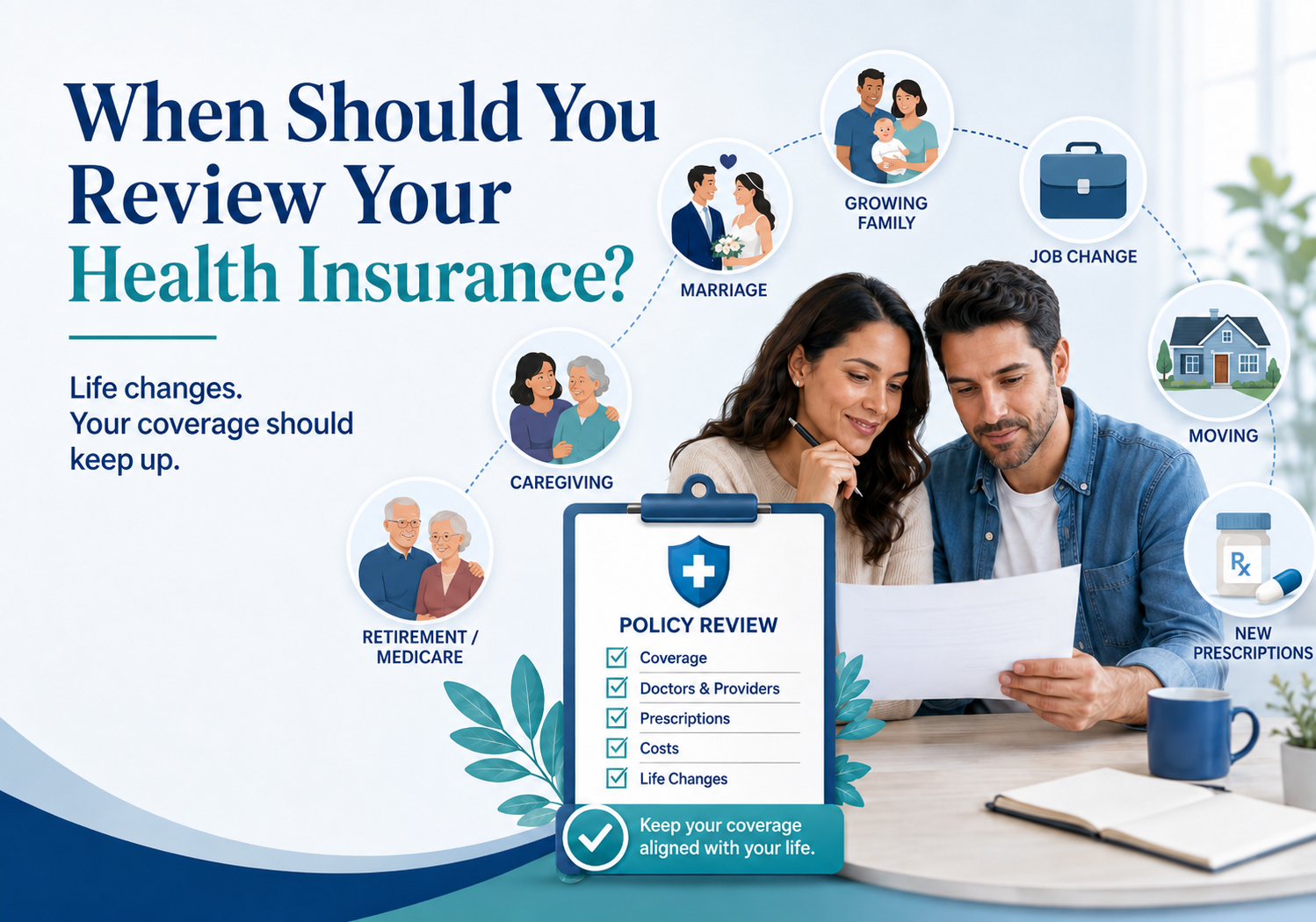
When people hear the phrase “life-changing event,” they often think about weddings, babies, or retirement.
Those certainly matter.
But many important healthcare decisions begin with much quieter moments.
Your life may change because you:
- Get married or divorced
- Welcome a child through birth, adoption, or foster care
- Change jobs or lose employer-sponsored coverage
- Become self-employed
- Move to a new state or county
- Experience a significant increase or decrease in income
- Become a caregiver for a parent or loved one
- Begin taking new prescription medications
- Develop a chronic health condition
- Plan for retirement or become eligible for Medicare
Each of these moments has the potential to change your healthcare needs, provider preferences, costs, or eligibility.
The Quiet Changes People Often Miss
Not every reason to review your health insurance begins with a major life milestone. Sometimes nothing in your life has changed. Your plan has.
Every year, health plans may change:
- Monthly premiums
- Deductibles
- Provider networks
- Prescription drug formularies
- Covered services
- Out-of-pocket costs
It’s easy to assume that renewing the same plan means receiving the same coverage.
That’s not always the case.
A quick review each year, and after important life events, can help you understand whether your current plan still meets your needs.
What Should You Review?
When reviewing your health insurance, don’t focus only on the monthly premium. Take a broader look at how your plan works when you actually need care.
Ask yourself:
- Are my preferred doctors and specialists still in network?
- Have my prescription medications changed?
- Has my family’s healthcare usage changed?
- Am I comfortable with my deductible and out-of-pocket maximum?
- Have my financial circumstances changed?
- Would I choose this same plan again today?
These questions often reveal whether your current coverage still aligns with your life.
When Can You Make Changes?
Many people believe they can only change health insurance during Open Enrollment. That’s true in many situations, but not all. Certain Qualifying Life Events may allow you to enroll in or change health insurance outside the annual Open Enrollment period.
Examples include:
- Marriage
- Birth or adoption of a child
- Loss of employer-sponsored coverage
- Moving to a new coverage area
- Divorce
- Other qualifying circumstances, depending on your situation
The official list of qualifying life events is maintained by HealthCare.gov and may vary depending on your specific circumstances. (KFF)
Don’t Wait Until There’s a Problem
Many coverage surprises don’t begin when a claim is filed. They begin months earlier, when life changed—but the health plan didn’t. A review doesn’t always mean changing plans.
Sometimes it confirms you’re exactly where you should be. Other times it helps you discover opportunities to better align your coverage with your current needs before unexpected healthcare costs or coverage questions arise.
That’s why reviewing your health insurance shouldn’t be viewed as another annual task.
It should be part of keeping pace with your life.
Life changes. Your coverage should keep up.
When Should You Ask for Help?
Health insurance can be complicated.
Plan details, provider networks, prescription coverage, deductibles, and eligibility rules can all vary depending on your situation.
If you’ve experienced a recent life change, or you’re simply unsure whether your current plan still fits, speaking with a licensed insurance professional can help you better understand your options before making a decision.
National Benefit Plans helps individuals, families, and small businesses navigate those conversations with clarity, confidence, and ongoing support.
Frequently Asked Questions
Should I review my health insurance every year?
Yes. Even if nothing in your life has changed, your health plan may have changed. Reviewing your coverage annually can help ensure it still meets your needs.
What counts as a qualifying life event?
Common qualifying life events include marriage, divorce, the birth or adoption of a child, loss of employer-sponsored coverage, certain moves, and other circumstances defined by applicable regulations. Eligibility varies by situation. (KFF)
Can I change my health insurance after moving?
Depending on where you move and your circumstances, relocating may qualify you for a Special Enrollment Period. A licensed insurance professional can help you determine your options.
My life hasn’t changed. Should I still review my plan?
Yes. Insurance carriers may update premiums, deductibles, provider networks, and covered services from year to year, even if your personal situation stays the same.
Sources
- KFF – Americans’ Challenges with Health Care Costs: https://www.kff.org/health-costs/americans-challenges-with-health-care-costs/ (KFF)
- HealthCare.gov – Qualifying Life Events: https://www.healthcare.gov/glossary/qualifying-life-event/ (KFF)

For over 30 years, NBP has been dedicated to the well-being of clients and the success of agents by always striving to do the right thing and caring for everyone as if they were family. We have offered the best national and local carriers offering top-notch, affordable healthcare coverage for individuals, families and groups, including supplemental Medicare plans.
Schedule an appointment: https://calendly.com/nbp-agents
Follow me on LinkedIn: LinkedIn